

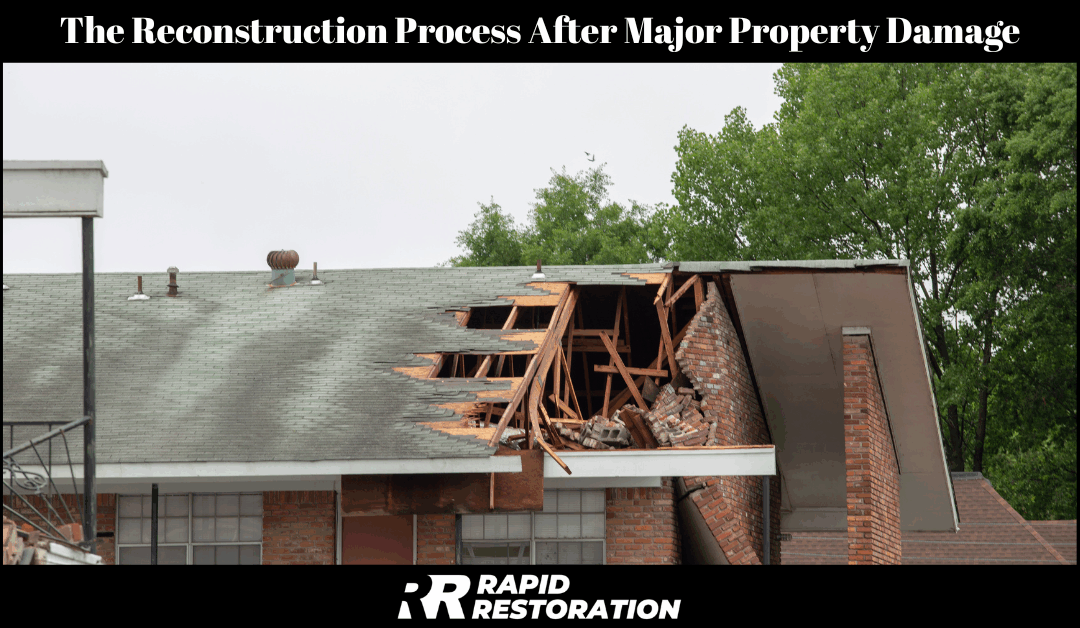
When a fire, flood, or severe structural disaster strikes your home or business, the aftermath can feel overwhelming. Beyond the initial shock, property owners must navigate cleanup, insurance, and ultimately the long journey of rebuilding. Understanding the reconstruction process after major property damage is essential for restoring your property safely, efficiently, and to pre-loss conditions.
Whether you’re dealing with charred framing after a fire or warped flooring following a flood, working with an experienced restoration company ensures the job is done correctly from start to finish. At Rapid Restoration, our team specializes in property reconstruction, guiding homeowners through every phase of recovery.
The Reconstruction Process
1. Initial Assessment and Securing the Property
Before any reconstruction can begin, the structure must be stabilized. Your contractor will conduct a full assessment to determine the extent of the damage, identify safety hazards, and create a plan for restoration.
What this step includes:
- Structural integrity evaluation
- Moisture and mold inspection (after floods)
- Fire and smoke damage analysis
- Electrical, plumbing, and HVAC assessment
- Temporary bracing and board-up services
This step is critical not only for safety but also for insurance documentation. According to FEMA, secondary damage can worsen rapidly after a fire or flood, making early intervention crucial. Learn more from FEMA’s official disaster safety guide: https://www.ready.gov/.
2. Cleanup and Mitigation
The cleanup phase removes debris and prevents further deterioration of the property. Mitigation ensures that issues like mold growth, lingering smoke odor, or structural instability do not spread.
Mitigation services may include:
- Water extraction and structural drying
- Soot and smoke remediation
- Mold removal and antimicrobial treatment
- Debris elimination and hazardous material disposal
- Odor neutralization
If water damage is involved—whether from firefighting efforts or flooding—Rapid Restoration Water Damage Restoration team ensures the building is dried properly to prevent long-term problems like mold or wood rot.
For fire-related issues, you can explore our Fire Damage Cleanup services to understand what happens before reconstruction begins.
3. Developing a Reconstruction Plan
Once cleanup is complete and the property is stabilized, your contractor will create a detailed reconstruction plan. This roadmap outlines what needs to be rebuilt and the materials, timeline, and budget involved.
A typical reconstruction plan covers:
- Structural rebuild (walls, floors, framing)
- Roofing replacement or repair
- Plumbing and electrical system restoration
- HVAC system repair or replacement
- Insulation and drywall installation
- Interior finishes (flooring, paint, cabinetry)
During this stage, homeowners work closely with the contractor and the insurance company. A qualified property reconstruction team ensures all documentation meets insurance guidelines, preventing delays or disputes in the claims process.
4. Structural Repairs and Rebuilding
With approvals in place, reconstruction officially begins. This is where the property transforms from damaged and unsafe to structurally sound and livable again.
Fire Damage Reconstruction
Rebuilding after a fire often requires:
- Removing charred framing
- Replacing damaged roof trusses or beams
- Installing new electrical wiring
- Restoring HVAC systems filled with soot
- Replacing insulation, drywall, flooring, and cabinetry
Fires often affect areas far beyond the burn site due to smoke and soot migration. A certified contractor ensures that every damaged component is replaced or restored.
Flood Damage Reconstruction
Rebuilding after a flood typically involves:
- Removing water-damaged drywall and insulation
- Replacing warped subflooring
- Treating structural wood for mold
- Restoring plumbing systems
- Repainting and installing new finishes
Floodwater is often classified as “Category 3” contaminated water, which means everything it touches must be safely removed and replaced.
5. Final Repairs and Finishing Touches
After structural work is complete, the final stage of rebuilding after fire or flood focuses on interior and exterior finishes that return the property to its pre-loss condition—or even better.
Final steps include:
- Painting and trim work
- Cabinetry, countertops, and fixtures
- Floor installation
- Final plumbing and electrical hookups
- Deep cleaning and odor removal
- Exterior repairs such as siding or roofing
This phase is often the most rewarding for homeowners as the project begins to look and feel like home again.
6. Post-Reconstruction Inspection
Once construction is complete, your contractor performs a final walkthrough and inspection. This ensures everything meets local building codes, safety standards, and insurance requirements.
A professional inspection checks:
- Structural integrity
- Compliance with electrical and plumbing codes
- Proper installation of materials
- Moisture levels (post-flood rebuilds)
- Air quality (post-fire reconstruction)
Rapid Restoration always completes a thorough final inspection so property owners feel confident that their home or business is safe and fully restored.
How Long Does Property Reconstruction Take?
The timeline varies based on factors such as damage severity, insurance approvals, material availability, and the scope of work. Minor reconstruction may take a few weeks, while major rebuilds after fires or floods can take several months.
Hiring an experienced restoration company helps streamline the process, reduce delays, and ensure the job is done right the first time.
Why Choose Rapid Restoration for Property Reconstruction?
Rapid Restoration offers full-service property restoration—from initial cleanup to complete reconstruction. Whether you’re dealing with fire, flood, storm, or mold damage, our licensed and certified experts handle every detail so you can focus on getting back to normal.
We offer:
- 24/7 emergency service
- Direct insurance billing
- Certified fire and water restoration specialists
- Full reconstruction and remodeling services
- Fast response times
If you’re facing mold issues after a flood, you can also visit:
Mold Removal Services
Conclusion
Experiencing major property damage is stressful, but with the right team, the reconstruction process doesn’t have to be. Understanding the steps involved—from assessment and cleanup to rebuilding and final inspection—helps you make informed decisions and ensures your property is restored safely and efficiently.
For expert help with property reconstruction or rebuilding after fire or flood, contact Rapid Restoration today.