

Experiencing a fire at home is traumatic. Once the flames are out, many homeowners wonder: How long will it take to restore my home? The answer isn’t simple — because every fire is different. But having a clear understanding of a typical fire restoration timeline can help you manage expectations, work effectively with contractors, and plan for temporary lodging or repairs.
Here’s a breakdown of the typical fire damage recovery process and realistic timeframes for each phase — from the moment the fire is extinguished to when you can move back in.
Why the Timeline Varies — Key Influencing Factors
Every fire—and every home—is different. A number of variables affect how long restoration takes:
- Severity of fire and extent of damage. A small kitchen fire is a vastly different situation than a blaze that damages structural framing or the roof.
- Smoke, soot, and water damage. Water used by firefighters or from sprinklers can add significant drying time and potential mold concerns.
- Size of the property. Larger houses or multi-room damages take longer to clean, repair, and rebuild.
- Scope of restoration (cleaning only vs. reconstruction). Simple smoke cleanup is far faster than structural repairs, rebuilds, and code-compliance work.
- Insurance, permitting, and contractor availability. Delays in approvals or material procurement often extend timelines.
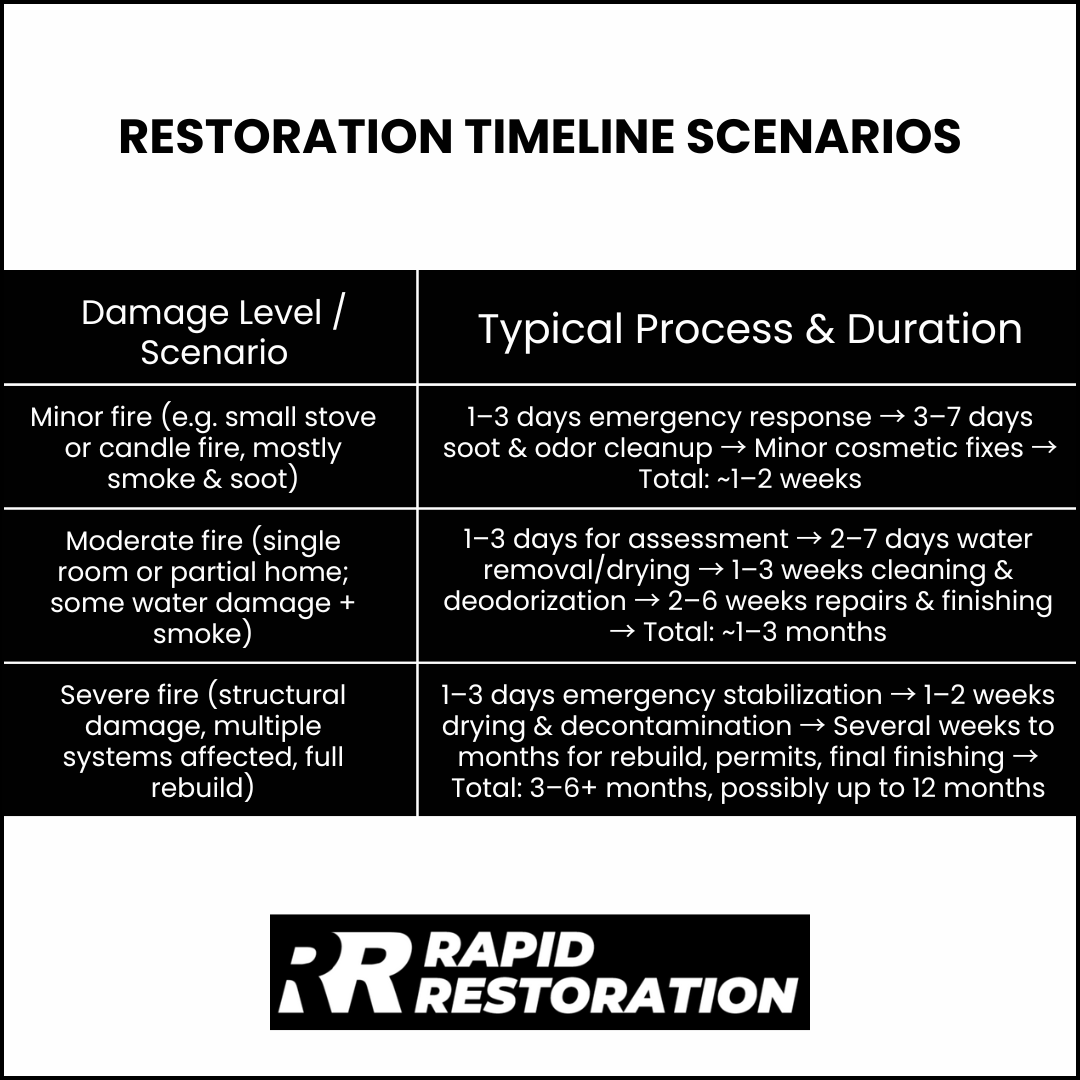
Because of these factors, the total fire damage restoration timeline can range from a few days for minor cleanup to several months (even up to a year) for major structural damage and rebuilds.
Typical Phases of Fire Damage Restoration — A Step-by-Step Timeline
Here’s a commonly followed restoration workflow, broken into phases, with typical duration ranges:
1. Emergency Response & Damage Assessment (First 24–48 hours)
Once the fire is out and authorities declare the property safe to enter, begin with:
- Securing the property (boarding up windows/doors, tarping roof damage, preventing further weather or vandalism exposure)
- Inspecting the extent of fire, smoke, soot, water damage — including structural integrity, hazard assessment, and a full scope of needed repairs.
- Producing an initial damage report and preliminary plan for cleanup and restoration.
Duration: 1–3 days.
2. Water Removal & Drying (If water was used to extinguish the fire) — 2 to 7 days
If water was used (sprinklers, hoses) there is often significant moisture, which must be addressed before cleanup or reconstruction:
- Extract standing water
- Deploy industrial dehumidifiers and air movers to dry walls, floors, and structural cavities to prevent mold and structural warping
Duration: 2–7 days (depending on how much water was used and how quickly drying begins).
3. Soot, Smoke & Odor Cleanup / Decontamination — 1 to 21 days
Smoke, soot, and odor often cause lasting damage if not handled properly. This phase usually includes:
- Removing soot and residue from walls, ceilings, floors, and personal belongings
- Cleaning or disposing of items that absorbed smoke (porous materials often must go)
- Air scrubbers, ozone treatments, ventilation and HVAC cleaning to eliminate lingering odors and toxins
- Content cleaning and content-pack out (furniture, clothing, personal items) when needed
Depending on the damage, this phase may span:
- Minor fire / smoke-only damage: 3–10 days
- Moderate damage / water + smoke: 1–3 weeks or more
4. Structural Repairs & Reconstruction — Weeks to Many Months
If soils, framing, drywall, wiring, or plumbing were damaged, full structural repairs and rebuilds are required. This is typically the most time-consuming phase:
- Demolition of irreparable materials
- Framing, drywall, flooring, paint, roofing, electrical, plumbing, HVAC repairs or replacements
- Permitting, inspections, code-compliance, final finishing (trim, cabinetry, fixtures, flooring, painting)
- Final cleaning, safety checks, HVAC/ventilation tests, air quality verification, walkthroughs for homeowners
Typical Timeline by Severity:
- Moderate damage (partial structural or small-area fire): several weeks to ~2 months.
Severe damage (whole-house damage, roof or framing affected): 3–6 months — sometimes longer depending on permit delays, materials, subcontractor availability, and extent of reconstruction.
What Can Delay Restoration?
Delays are common, and some of the frequent causes include:
- Insurance approval delays or disputes — before work starts or rebuilds begin, many insurers require detailed documentation, estimates, and adjuster approvals.
- Permitting or inspection wait times — structural rebuilds, electrical, plumbing and HVAC work often require permits and inspections, which can add weeks.
- Availability of contractors or materials — especially in busy seasons or during widespread disasters, scheduling and lead times for materials can slow progress.
- Secondary issues — hidden water damage, mold growth, or structural instability discovered after initial inspection can add unexpected work and time.
What Homeowners Can Do to Help Speed Up the Process
To help get things back to normal as quickly and safely as possible:
- Call a professional restoration company immediately – the sooner cleanup and drying begin, the less secondary damage (like mold or structural degradation).
- Document everything — photos, videos, inventory of contents. This helps with insurance claims and ensures nothing gets overlooked during cleanup.
- Work closely with contractors — pick a full-service restoration provider if possible (one who handles board-up, cleaning, reconstruction, and final finishing). That reduces delays due to multiple subcontractors.
- Stay in communication with your insurance and adjuster — prompt approvals and documentation reduce delays before rebuilding can begin.
- Consider temporary housing if needed — especially important when water, smoke, or structural damage makes living unsafe during cleanup or reconstruction.
How This Applies to Rapid Restoration & Your Clients
At Rapid Restoration, our goal is to support homeowners through every phase of the restoration journey — from emergency response and mitigation to full rebuild and final inspection. Understanding a realistic fire damage recovery process timeline helps us:
- Set clear homeowner expectations from the start
- Coordinate insurance, subcontractors, and permit timelines efficiently
- Communicate effectively about progress — reducing stress for homeowners during a difficult time
Conclusion
There’s no one-size-fits-all answer to how long fire damage restoration takes. The fire restoration timeline depends heavily on the extent of damage, whether water or smoke added complexity, the size of your home, and how quickly restoration work begins. For a minor fire, you may be back in your home in a week or two. For a major structural fire, 3–6 months (or more) may be necessary.
But with prompt action, experienced professionals, and clear communication — such as that provided by Rapid Restoration — you can move through each phase of the fire damage recovery process as efficiently as possible. Contact Rapid Restoration today.