

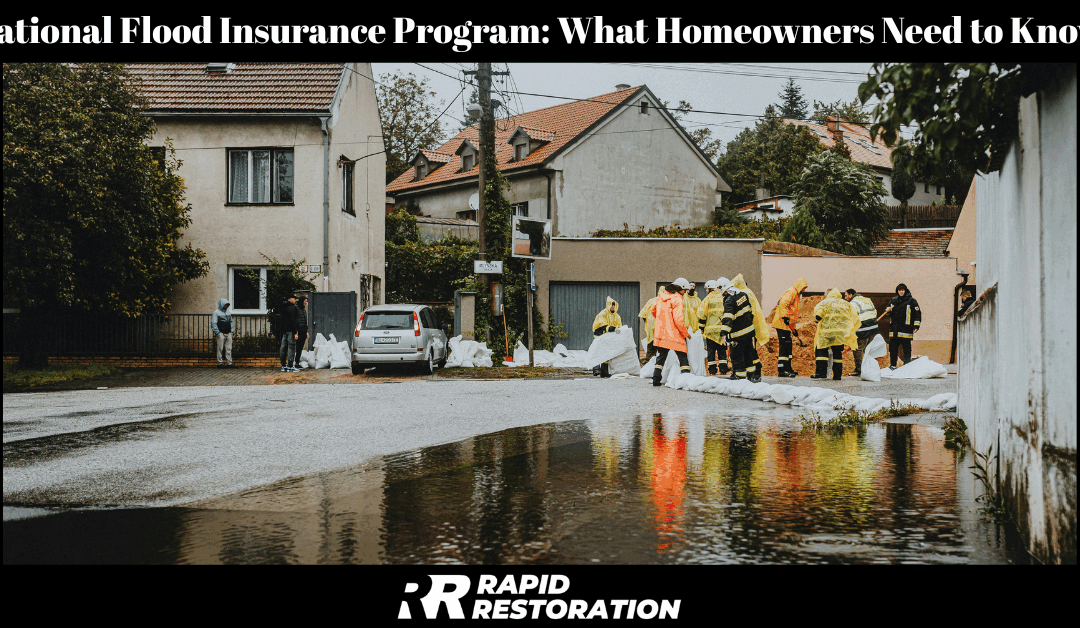
Flooding is one of the most common and costly natural disasters in the U.S. Yet most standard homeowners insurance policies do not cover flood damage. That’s where the National Flood Insurance Program (NFIP) steps in. Below is a comprehensive flood insurance guide tailored for homeowners, covering eligibility, coverage limits, cost factors, claims and best practices — all with the goal of demystifying what you need to know about the NFIP.
What Is the NFIP?
The National Flood Insurance Program (NFIP) was established by Congress in 1968 via the National Flood Insurance Act to help homeowners, renters, and business owners access flood insurance in communities that participate in NFIP.
NFIP has two core goals:
- Provide federally backed flood insurance to mitigate financial hardship after flooding.
- Encourage communities to adopt better floodplain management standards (e.g. land use controls, building regulations).
The program is administered by FEMA under the Federal Insurance and Mitigation Administration (FIMA).
Importantly, flood insurance through NFIP is only available in participating communities. If your local municipality doesn’t participate, you generally can’t get NFIP coverage.
Who Is Eligible?
Here’s who can get an NFIP policy:
- Homeowners, renters, or business owners located in communities that comply with NFIP floodplain management guidelines.
- If your property is in a designated Special Flood Hazard Area (SFHA) and you have a mortgage from a government-backed lender (like FHA, VA, Fannie Mae, Freddie Mac), your lender will typically require flood insurance.
- Even if you live outside a high-risk zone, you can still purchase NFIP coverage (and doing so is often wise) — about 25% of flood claims happen outside high-risk zones.
If your home has received federal disaster assistance in the past, you may be required to maintain flood insurance to be eligible for future assistance.
Flood Insurance Coverage: What Does NFIP Cover?
Understanding exactly what your NFIP policy covers (and doesn’t cover) is crucial. Here’s a breakdown:
Building / Structural Coverage
- For most residential (single-family) properties, the NFIP provides up to $250,000 in coverage for the structure.
- This includes repairs to the dwelling, foundation, appliances, plumbing, electrical systems, HVAC, and debris removal.
- Note: the policy covers direct physical damage from flood only (i.e. rising water, overflow) — not land, landscaping, or damage from gradual issues like moisture infiltration.
Contents / Personal Property Coverage
- Contents (your belongings inside the home) are covered separately, up to $100,000 under a standard residential NFIP policy.
- Items like furniture, clothing, electronics, appliances, and stored goods may be covered (check your policy).
Limitations & Exclusions
- NFIP policies are not “valued policies” — they pay up to the lesser of actual loss (replacement cost or actual cash value) or policy limit.
- There is typically a waiting period of 30 days before a new policy becomes effective (with few exceptions).
- Damage caused by sewer backup, mold, or gradual leakage is often excluded. (Flood damage must be from a defined flood event.)
- Land, bulkheads, seawalls, swimming pools, and grading or landscaping are not covered.
- If a loss is caused partly by flood and partly by another peril (e.g. wind), disputes can arise about what damage is eligible.
For business or multi-family properties, NFIP has higher building and contents limits (up to $500,000).
Premiums, Ratings & Risk Factors
Your flood insurance cost depends on a variety of factors. Here are key influencers:
- Flood zone classification (e.g. A, V, AE, etc.) as shown on the FEMA Flood Insurance Rate Maps (FIRMs)
- Elevation / building height above base flood elevation
- Building construction type (e.g. slab, crawlspace, elevated)
- Foundation type and condition
- Age of the building / materials
- Community rating: some municipalities earn discounts by adopting stronger floodplain practices
- Policy deductibles and optional endorsements
In April 2024, FEMA released an updated NFIP Flood Insurance Manual reflecting current underwriting and rating methodology.
How to Buy & Manage NFIP Coverage
Here is a practical step-by-step flood insurance guide to help homeowners:
- Check your community’s NFIP status. Visit FEMA’s “Get Insured” site or FloodSmart to see whether your city participates.
- Get a flood insurance quote. Use the NFIP online quoting tool or contact a licensed agent.
- Compare coverage and rates. Confirm building vs contents limits, deductibles, and optional coverage add-ons.
- Purchase early. Because of the 30-day waiting period, don’t wait until flood season or before a storm to secure coverage.
- Review your policy annually. As your home changes (renovations, additions, elevation), get your agent to update your policy accordingly.
- Document and inventory. Keep records (photos, receipts) of your belongings and structural features to support future claims.
Filing a Claim & Recovery
If your home is damaged by a flood:
- Submit your claim promptly to your NFIP insurer.
- Mitigate further damage where possible (e.g. remove wet materials, ventilate).
- Provide inventories, photos, receipts, and other documentation of damaged items.
- Expect an adjuster to inspect your property.
- Use the NFIP Claims Handbook to understand the process and policy language.
- If there’s disagreement on coverage or payment, you may be able to appeal.
After a disaster, NFIP coverage often interacts with FEMA disaster assistance — having flood insurance may affect eligibility for federal aid.
Tips & Best Practices for Homeowners
- Even if flood insurance isn’t required, taking it is often a smart financial safeguard — flooding can happen almost anywhere.
- Consider elevation of utilities (HVAC, electrical, water heaters) above expected flood levels.
- Know and understand your flood zone; use FEMA’s Map Service Center to view FIRMs.
- Ask your community about Community Rating System (CRS) benefits — some offer premium discounts for mitigation efforts.
- Stay aware of reauthorization and funding changes to NFIP; lapses in the program could affect the ability to issue new policies. (As of late 2025, the NFIP was at risk of expiring pending Congressional action.)
- Work with a restoration company (such as Rapid Restoration) for post-flood recovery — timely water removal, drying, mold mitigation, and structural repair can reduce claim costs and speed restoration.
Why This Matters to Rapid Restoration & Your Readers
As a restoration company, Rapid Restoration is often involved in responding to flood-damaged homes. By educating your audience on the National Flood Insurance Program, you help homeowners:
- Understand the role of insurance in covering restoration work
- Better document damage to support claims
- Appreciate the importance of timely mitigation to prevent further losses
You can link internally to your relevant service pages (e.g. water damage restoration, mold removal, flood cleanup) from phrases like “post-flood recovery,” “restoration company,” or “mitigation work.”
External Resources & Further Reading
- FEMA / NFIP flood insurance overview & program details: FEMA Flood Insurance
- FloodSmart (NFIP’s consumer portal) for quoting, maps, and agent locator
- NFIP Flood Insurance Manual (current edition) for underwriting & rules
- NFIP Claims Handbook for claims process guidance
- NAR’s Consumer Guide: Flood Insurance for homeowners’ perspective
Conclusion
The National Flood Insurance Program is a foundational tool in helping protect homeowners from the financial devastation of flooding. While it has limitations and nuances, understanding how NFIP works — eligibility, coverage, costs, claims, and policy management — empowers homeowners to make informed decisions. By offering a clear flood insurance guide and integrating restoration expertise, Rapid Restoration can help build trust and provide real value to homeowners facing flood risk.